
Which memories should you start with?
Begin with something recent and specific. Choose one photograph from the last few months and write what was happening just before or after it. A short account of an ordinary day can be easier to begin than a complete family history.
Mix milestones with habits: a move, a new baby or a retirement alongside the Sunday walk, a recipe or the game that comes out whenever everyone visits. There is no need to make a quiet quarter sound busier than it was.
Try asking
- What do we do so often that nobody thinks to photograph it?
- Which familiar phrase would you like the next generation to remember?
- What changed this quarter that might be easy to forget?
What should you write beside a photograph?
Record who is in it, roughly when and where it was taken, and why you chose it. Add the name of the person telling the story if it is their memory. “Summer 2004, probably” is more useful than a precise date nobody can support.
Ask the people pictured before including photographs they might find private or embarrassing. Keep the original file separately; an edited or compressed copy should not be your only version.
How do you collect stories from different generations?
Ask one question at a time and give the person room to answer. A voice note can work for someone who finds speaking easier than writing. A relative who loves old photographs might enjoy choosing one and explaining the people in it.
Keep exact quotes exact. If you remember only the gist, write it as a recollection rather than placing invented words in quotation marks. If two people remember an event differently, you can preserve both accounts with clear attribution.
Try asking
- Who taught you to make that dish?
- What would we never guess from this photograph?
- Which part of your first home do you remember most clearly?
How can a newspaper make this manageable?
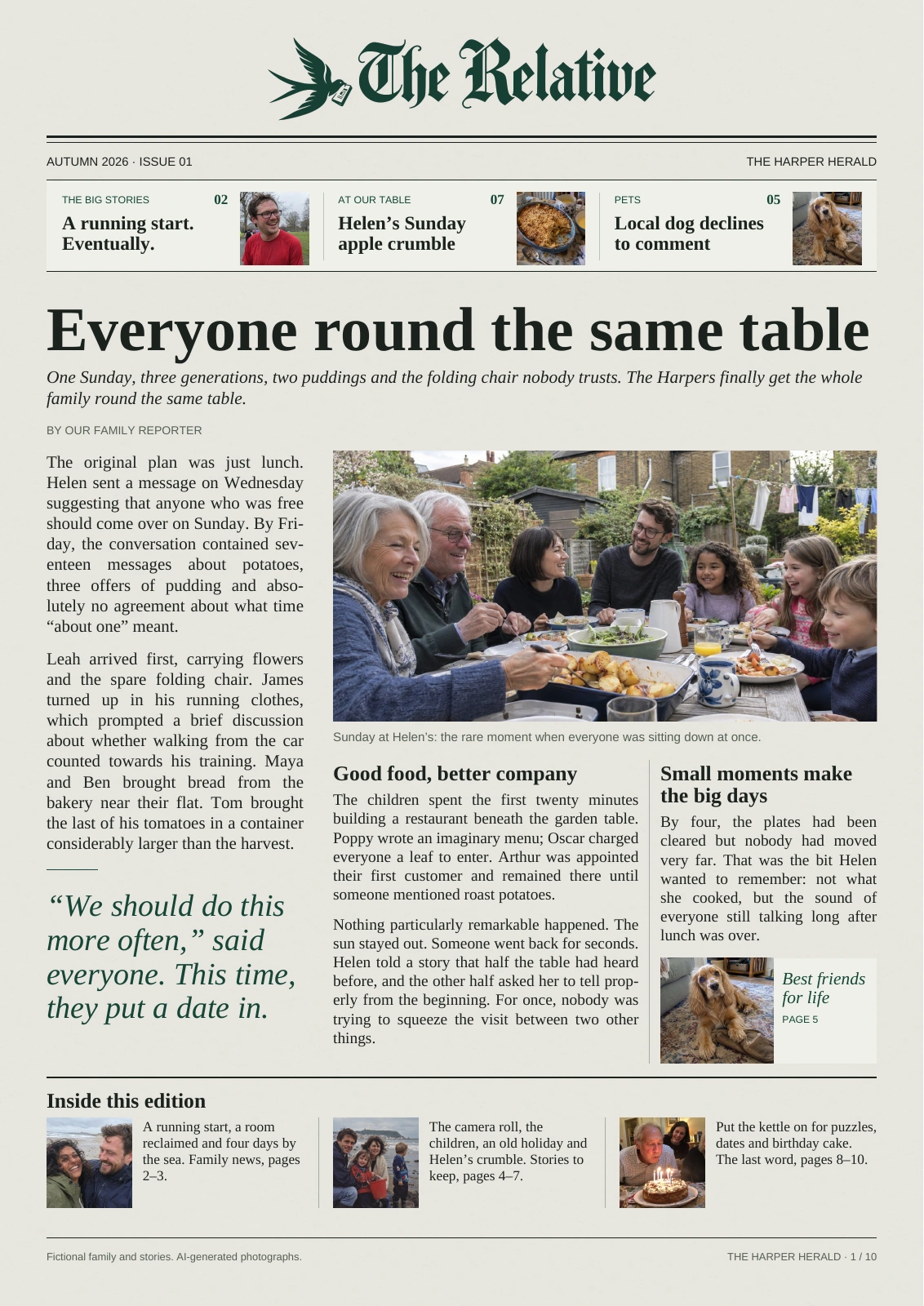
Collect a few updates every three months instead of tackling the whole archive at once. With The Relative, adults send text, voice notes and photographs. Our reporter uses their supplied facts and quotes to prepare newspaper articles, with checks and review before release.
One subscription covers up to 20 adult contributors. The released edition is private to the group and includes a downloadable PDF. Recipes, pets, family notices and small stories can sit alongside the larger events; the final contents depend on what the family contributes.
How should you keep the finished editions?
Download each finished PDF and give it a clear filename, such as Family-Newspaper-2026-Autumn.pdf. Keep a second copy in another location you control, and check occasionally that both copies still open. Keep important original photographs as well.
The Relative does not promise perpetual cloud access. Saving your own copies lets the newspaper remain part of your family collection. You can print the PDF yourself; professional printing and delivery are not currently available to order.
A small habit, every three months
Your quarterly family update checklist
- Choose three or four updates from the quarter.
- Pick the photographs that explain those stories.
- Add names, approximate dates, places and context.
- Check quotations and label uncertain memories.
- Confirm that the people involved are happy to be included.
- Download the released PDF and keep a second copy.
Copy a message to send to your family, or explore 12 story ideas for a quiet quarter.